
Importance of Personal Finance

personal finance basics

Understanding personal finance is one of the most valuable life skills you can develop, regardless of whether you’re a student, entrepreneur, or financial professional. It forms the backbone of smart money management, helping individuals make confident decisions about budgeting, saving, investing, and long-term planning. In today’s fast-paced economy, having a strong grasp of personal finance basics for beginners is no longer optional—it’s essential for achieving financial stability and sustainable growth.
importance of personal finance planning-Savings Strategies
At its core, personal finance covers a wide range of areas, including savings strategies, investment planning, and debt management. These elements work together to create a balanced financial life. For entrepreneurs and small business owners, understanding how personal finance affects business success is especially critical. Keeping personal and business finances separate—while ensuring they support each other—can prevent cash flow issues and improve long-term profitability. Resources such as the U.S. Small Business Administration provide practical guidance on managing finances effectively for business owners.
Why Personal Finance Matters for Students
For students, learning personal finance early provides a powerful advantage. As they move toward financial independence, understanding concepts like budgeting, credit, and student loans becomes crucial. Developing smart budgeting habits for students helps avoid common mistakes, such as overspending or taking on unnecessary debt.
Building financial literacy at a young age can lead to better decision-making in the future. For example, knowing how credit scores work—explained in detail by the Consumer Financial Protection Bureau—can help students maintain good financial health. By mastering these fundamentals, students can confidently navigate financial responsibilities and lay the groundwork for long-term wealth creation.
The Role of Personal Finance Advisors
Personal finance advisors play an important role in helping individuals and businesses navigate complex financial decisions. Their expertise allows them to design customized plans tailored to specific goals, whether that’s buying a home, planning for retirement, or expanding a business.
A well-crafted financial plan acts as a roadmap, guiding clients toward their objectives while minimizing risks. Advisors also stress the importance of regular financial check-ins to adjust strategies as life circumstances evolve. Trusted organizations like the Financial Planning Association provide valuable insights into professional financial planning standards and best practices.
The Foundation of Financial Success

Creating and maintaining a budget is one of the most practical steps anyone can take to improve their financial health. A budget helps track income and expenses, uncover spending patterns, and set realistic savings targets. Adopting a simple monthly budgeting plan for beginners can significantly improve money management.
Budgeting not only builds discipline but also empowers individuals to make informed financial decisions. Tools and guidelines from reputable sources such as Investopedia can help individuals understand various budgeting methods and choose the one that best fits their lifestyle.
Building Long-Term Financial Security
Ultimately, personal finance is about more than just managing money—it’s about creating a secure and fulfilling future. Whether you’re an entrepreneur aiming for business growth, a student starting your financial journey, or an advisor helping others succeed, mastering long-term financial planning strategies is key.
According to the World Bank, improving financial literacy globally can significantly enhance economic stability and individual well-being. This underscores how important personal finance is—not only on an individual level but also on a broader societal scale.
Knowledge With Confidence
The importance of personal finance cannot be overstated. It equips individuals with the knowledge and confidence to navigate financial challenges, capitalize on opportunities, and work toward financial independence. By embracing personal finance as a lifelong learning journey, you can continuously improve your financial well-being and overall quality of life.
No matter where you are in your journey, starting today with the right knowledge and habits can set you on a path toward lasting financial success.
Key Components of Personal Finance

Personal finance is one of the most important foundations for building a secure and stress-free life. Whether you’re a student, a freelancer, or a small business owner, understanding how money works—and how to manage it effectively—can make a significant difference in your financial future. From creating a realistic budget to planning for retirement, each component of personal finance plays a vital role in achieving long-term stability and growth.
Budgeting: The Backbone of Financial Stability
At the core of every strong financial plan lies budgeting. Simply put, budgeting means tracking how much money you earn and how much you spend. It’s not just about limiting expenses—it’s about making sure your money is working toward your goals.
A practical budget helps you:
- Control daily spending
- Identify unnecessary expenses
- Allocate funds for savings and investments
For beginners, tools such as Mint or YNAB (You Need a Budget) can simplify the process. If you’re just starting out, following a simple monthly budgeting plan for beginners can help you build consistency without feeling overwhelmed.
For a deeper understanding of budgeting frameworks, you can explore this guide from the Consumer Financial Protection Bureau:
👉 https://www.consumerfinance.gov/consumer-tools/budgeting/
A well-structured budget doesn’t just manage your present—it builds the foundation for your future.
Saving and Investing: Building Long-Term Wealth

Saving money is essential, but investing is what truly helps your wealth grow over time. One of the first steps is creating an emergency fund—typically covering 3 to 6 months of living expenses. This is especially important for freelancers and entrepreneurs who may face income fluctuations.
Once your emergency fund is in place, you can explore investment opportunities such as:
- Stocks
- Bonds
- Mutual funds
- ETFs
If you’re new to this area, learning low-risk investment strategies for beginners is a smart move before diving deeper into the market.
High-quality educational resources like Investopedia provide clear explanations of investment concepts:
👉 https://www.investopedia.com/investing-4427685
The key is consistency—regular saving and investing, even in small amounts, can lead to substantial growth over time thanks to compounding.
Debt Management: Reducing Financial Stress

Debt can quickly become a burden if not handled properly. Many individuals juggle student loans, credit card balances, or business-related debts. Without a clear repayment plan, these obligations can limit your financial progress.
Effective debt management involves:
- Prioritizing high-interest debt
- Making consistent payments
- Avoiding unnecessary borrowing
Strategies like the debt snowball method for beginners or the avalanche method can help you pay off balances faster and more efficiently.
For trusted advice on managing debt, resources from the Federal Trade Commission are highly valuable:
👉 https://consumer.ftc.gov/articles/debt-relief-and-credit-repair-scams
Taking control of your debt not only improves your credit score but also frees up money for saving and investing.
Retirement Planning: Securing Your Future Early
Retirement might feel far away, especially for students or early-career professionals, but starting early gives you a massive advantage. Even small, consistent contributions can grow significantly over time due to compound interest.
Common retirement savings options include:
- Employer-sponsored plans like 401(k)s
- Individual Retirement Accounts (IRAs)
If you’re employed, take full advantage of employer matching contributions—it’s essentially free money.
To understand how retirement planning works, check out guidance from U.S. Securities and Exchange Commission:
👉 https://www.investor.gov/introduction-investing/investing-basics
Focusing on early retirement planning strategies for young professionals can help you build long-term financial security with less stress later in life.

Financial Education: The Key to Smart Decisions
No financial strategy works without proper knowledge. Financial education empowers you to make informed decisions about spending, saving, investing, and borrowing.
Staying updated on:
- Market trends
- Economic changes
- Financial tools and products
…can significantly improve your financial outcomes.
Organizations like Khan Academy offer free courses on personal finance:
👉 https://www.khanacademy.org/college-careers-more/personal-finance
You can also consider consulting a financial advisor if your situation becomes more complex. Continuous learning ensures you stay adaptable in an ever-changing financial landscape.
Quick wins
Mastering personal finance isn’t about quick wins—it’s about building consistent habits over time. Budgeting keeps your finances organized, saving and investing grow your wealth, debt management protects your stability, retirement planning secures your future, and financial education ties it all together.
By focusing on these core components and applying practical personal finance tips for beginners, you can take control of your money and move confidently toward financial independence.
Comprehensive Personal Finance Education
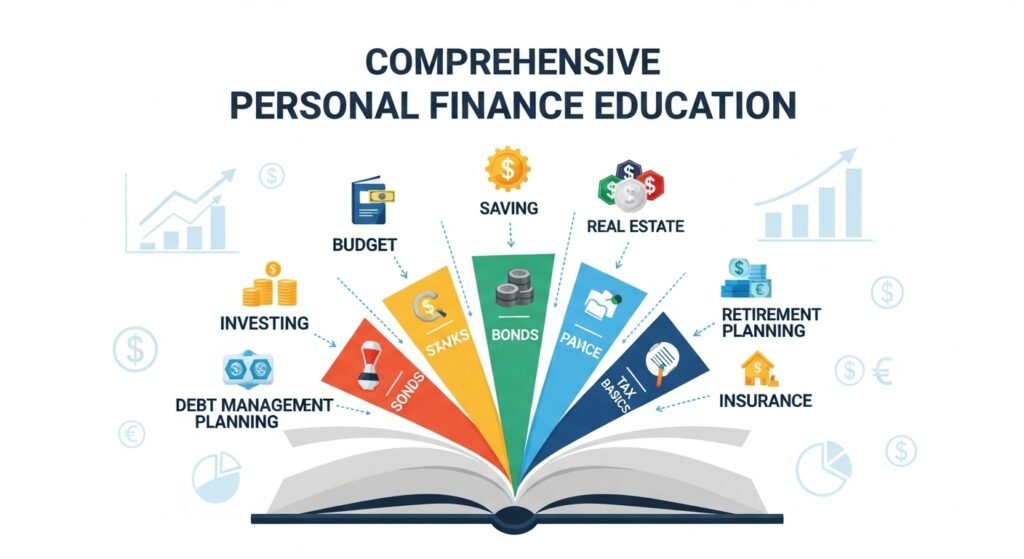
The Importance of Personal Finance in Everyday Life
Comprehensive personal finance education is no longer optional—it’s a practical necessity for anyone aiming to build long-term financial stability and independence. Whether you’re a student navigating your first paycheck, a freelancer managing irregular income, or a small business owner making strategic decisions, understanding money management fundamentals can shape your future outcomes in powerful ways.
Personal Finance Strategies for Small Business Owners
For entrepreneurs and small business owners, personal finance and business finance often overlap. Decisions about cash flow, reinvestment, and savings are deeply influenced by personal financial habits. According to the U.S. Small Business Administration, maintaining clear financial records and disciplined budgeting are among the most critical factors in sustaining a successful business. This highlights the importance of integrating personal finance strategies for small business owners into daily operations.
Personal Finance Tips for Students and Beginners
Students, on the other hand, are often taking their first step toward financial independence. Learning the basics—such as creating a budget, avoiding unnecessary debt, and understanding how credit works—can help prevent long-term financial mistakes. Resources such as the Consumer Financial Protection Bureau offer practical, beginner-friendly tools that help young individuals build strong financial habits early. Adopting personal finance habits at this stage can set the tone for lifelong financial health.
Effective Budgeting Strategies for Financial Stability
A strong foundation in personal finance starts with budgeting. Creating a realistic budget that reflects income, expenses, and future goals is one of the most effective ways to stay financially organized. The widely recommended 50/30/20 budgeting rule—explained in detail by Investopedia—encourages individuals to allocate income toward needs, wants, and savings in a balanced way. Using such frameworks supports effective budgeting strategies that promote financial stability, helping individuals prioritize essentials while planning for growth.
Improving Financial Literacy for Long-Term Wealth Building
Beyond budgeting, financial literacy is central to making informed decisions. Understanding how interest rates affect loans, how investments grow over time, and how retirement planning works can significantly influence financial outcomes. Educational platforms like Khan Academy provide free lessons that break down complex financial topics into simple, digestible concepts. This kind of access supports improving financial literacy for long-term wealth building, making it easier for people to take control of their finances with confidence.
Financial Planning Strategies for Self-Employed Professionals
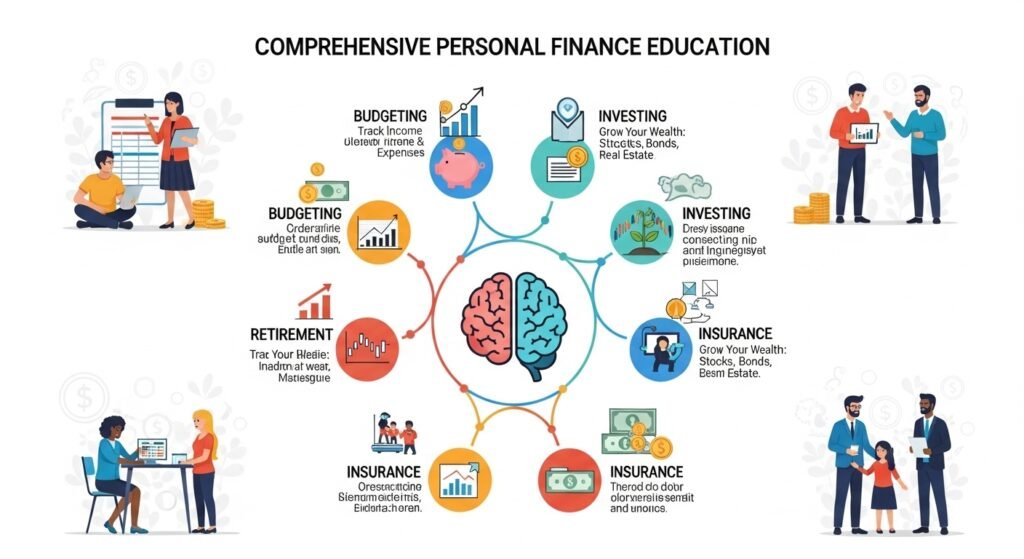
For self-employed individuals and freelancers, financial management requires even greater discipline. Income can vary from month to month, making it essential to create a flexible budget that accounts for both high-earning and low-earning periods. Planning for taxes is equally important. Guidance from the Internal Revenue Service emphasizes the need to set aside a portion of income for tax obligations throughout the year. Following financial planning strategies for self-employed professionals can help avoid unexpected financial stress and ensure smoother cash flow management.
Long-Term Savings and Investment Strategies for Beginners
Another key aspect of personal finance education is understanding the importance of saving and investing. Building an emergency fund, contributing to retirement accounts, and exploring low-risk investment options can create financial security over time. Even small, consistent contributions can grow significantly thanks to compound interest—a concept widely explained by trusted institutions like the Federal Reserve. Applying long-term savings and investment strategies for beginners helps ensure that individuals are not just earning money but also growing it.
Building Financial Independence Through Education
Ultimately, comprehensive personal finance education empowers individuals to make smarter financial decisions at every stage of life. It bridges the gap between earning and managing money effectively, enabling people to align their financial choices with their personal and professional goals.
In conclusion, personal finance education is not just beneficial—it is essential. From students building their first budgets to entrepreneurs scaling their businesses, financial knowledge provides the tools needed to succeed. By embracing comprehensive personal finance education, individuals can take control of their financial future, reduce uncertainty, and build a path toward lasting security and success.
Best financial advisors for teachers
Finding the best financial advisors for teachers can make a significant difference in building long-term financial security, especially given the unique challenges educators face, such as modest salaries, pension planning, and student loan management. The right advisor understands teacher-specific benefits like retirement plans, 403(b) accounts, and public pension systems. Organizations like the National Education Association and 403bwise offer valuable guidance and resources to help educators make informed decisions. Working with an advisor who specializes in retirement planning for teachers and education professionals ensures that educators can maximize their savings, reduce financial stress, and confidently plan for a stable future.
Common Misconceptions About Personal Finance
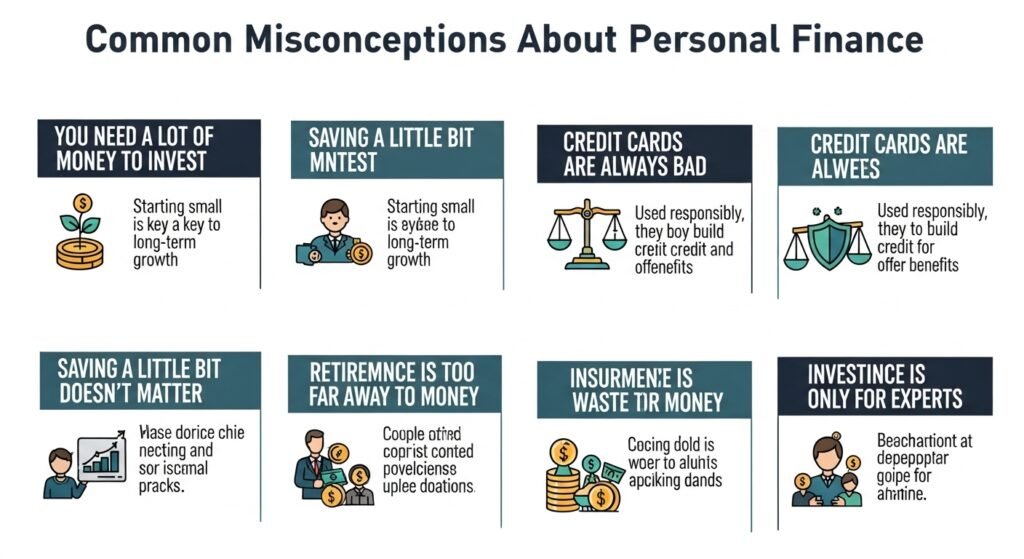
Budgeting Is Only for People in Financial Trouble
A widely held belief is that budgeting is only necessary when money is tight. In reality, budgeting is a core financial habit for everyone—regardless of income level. It allows individuals to clearly track earnings, monitor spending, and make smarter financial decisions. Organizations like Consumer Financial Protection Bureau emphasize that consistent budgeting is key to maintaining financial health and avoiding unnecessary debt. Adopting simple budgeting methods for beginners and small business owners can help individuals stay in control and plan confidently for the future.
Personal Finance Only Matters Later in Life
Another common misconception is that personal finance becomes important only when approaching retirement or facing financial hardship. The truth is, financial literacy is essential from the very beginning of one’s financial journey. Students and young professionals benefit immensely from learning how to save, invest, and manage debt early. Platforms like Khan Academy offer accessible lessons that break down these concepts into manageable steps. Building early financial planning habits for long-term success helps prevent costly mistakes and creates a strong financial foundation.
Financial Advisors Are Only for the Wealthy
Many people assume that financial advisors are only useful for high-net-worth individuals. This belief often stops small business owners and freelancers from seeking valuable guidance. In reality, financial advisors can offer practical strategies tailored to a wide range of income levels and goals. According to U.S. Securities and Exchange Commission, even basic financial advice can significantly improve decision-making and risk management. Exploring affordable financial advisory services for small business owners can lead to more structured planning and better long-term outcomes.
All Debt Is Bad Debt

Debt often carries a negative reputation, leading many to believe it should always be avoided. While excessive or poorly managed debt can create serious financial problems, not all debt is harmful. Strategic use of debt—such as business loans, student loans, or mortgages—can support growth and opportunity. Educational resources from Investopedia explain the distinction between good debt and bad debt in practical terms. Understanding how to use debt wisely for financial growth allows individuals and entrepreneurs to make informed and beneficial financial choices.
Financial Planning Is a One-Time Task
A final misconception is that financial planning is something you do once and forget. In reality, personal finance is an ongoing process that evolves with life changes, income shifts, and new goals. Regularly reviewing budgets, investments, and savings plans ensures that financial strategies remain relevant. Guidance from institutions like Federal Reserve highlights the importance of adapting financial plans over time. Embracing continuous financial planning for changing life goals helps individuals stay on track and seize new opportunities as they arise.
By recognizing and correcting these common misconceptions, individuals can approach personal finance with greater clarity and confidence. Understanding the truth behind these myths opens the door to smarter decisions, improved financial stability, and long-term success.
Take a Smart Investing Course

why is it important to be financially literate
Investing wisely isn’t just for financial experts—it’s an essential life skill for anyone who wants to build wealth and create long-term financial security. Whether you’re a student just getting started, a freelancer managing your own income, or a small business owner planning for growth, enrolling in a smart investing course can give you the clarity and confidence to make better financial decisions.
Many well-structured courses introduce learners to key investment options such as stocks, bonds, mutual funds, and real estate. Trusted educational platforms like Khan Academy provide accessible lessons that break down these concepts into simple, practical insights. This kind of learning supports beginner-friendly investing courses for long-term wealth building, helping individuals understand how different assets work together in a portfolio.
Understanding Risk Management and Portfolio Diversification
One of the most valuable lessons in any investing course is learning how to manage risk effectively. Every investment carries some level of uncertainty, and understanding your personal risk tolerance is key to making smart choices. Courses often teach how to spread investments across different asset classes—a strategy known as diversification.
Financial guidance from institutions like U.S. Securities and Exchange Commission emphasizes diversification as a way to reduce potential losses while maintaining growth opportunities. This is especially important for entrepreneurs and self-employed individuals who may already face income volatility. Applying risk management strategies for beginner investors can help protect capital while still allowing for steady returns over time.
Why is it important to set financial goals
A smart investing course doesn’t just focus on where to invest—it also teaches how to plan. Creating a personal financial roadmap helps individuals define clear goals, whether it’s saving for retirement, buying a home, or expanding a business.
Resources from Investopedia highlight the importance of aligning investments with a structured financial plan. This approach supports financial planning and budgeting for successful investing, ensuring that individuals can invest consistently without compromising their daily financial needs. For personal finance advisors, these principles are essential when guiding clients toward sustainable financial growth.
Staying Updated with Market Trends and Strategies

In today’s fast-moving global economy, staying informed is just as important as getting started. A quality investing course teaches not only historical market behavior but also how to interpret current trends and economic signals.
Organizations like Morningstar provide in-depth market analysis and data that investors can use to make informed decisions. Learning how to analyze this information supports understanding stock market trends for beginners, enabling individuals to adapt their strategies as conditions change. This is particularly valuable for self-employed professionals who must remain flexible in both income and investment planning.
Building Confidence for Long-Term Financial Growth
At its core, taking a smart investing course is about building confidence. When individuals understand how investing works, they are far more likely to take action and stay consistent over time. Whether the goal is retirement planning, generating passive income, or funding a major life milestone, the right knowledge makes all the difference.
Educational guidance from institutions like the Federal Reserve reinforces the importance of long-term investing and disciplined financial habits. By applying long-term investment strategies for financial independence, individuals can gradually grow their wealth while minimizing unnecessary risks.
Invest in Knowledge Before You Invest Money
Ultimately, a smart investing course is one of the best investments you can make in yourself. It equips you with the tools, strategies, and mindset needed to navigate the complexities of the financial world with confidence.
Financial literacy course for beginners, students, small business owners, and financial professionals alike. Investing in education lays the foundation for smarter financial decisions. By embracing smart investing courses for beginners and entrepreneurs, you position yourself for long-term success, greater financial stability, and the ability to turn your financial goals into reality.